Product Overview
Product Summary
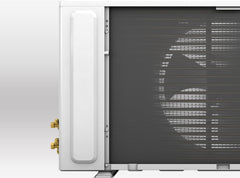
The WhisperKOOL Mini Blow-Through S-WKBT-MINI-220 is a concealed 220V split-system wine cellar cooling solution for approximately 500 cubic feet under qualifying cellar conditions. Its compact evaporator can deliver air through two ducts, two directional deflectors, or a combined duct-and-deflector arrangement. The standard KDT control configuration uses a liquid-temperature bottle probe, while an optional 24V conversion permits operation through a customer-supplied third-party thermostat.
This system is best suited to projects that require professional refrigeration installation, remote condenser placement, adaptable airflow, and a less visible cooling solution than a conventional through-the-wall unit.
At a Glance
Quick Product Specifications
| Product |
WhisperKOOL Mini Blow-Through 220V H.E. Wine Cellar Cooling System |
| Model / SKU |
S-WKBT-MINI-220 |
| System Type |
Air-cooled split-system wine cellar cooling system |
| Suggested Cellar Size |
Approximately 500 cu. ft. when the cellar is properly insulated, sealed, and protected by a complete vapor barrier |
| Airflow Configurations |
Ducted, ductless, or hybrid |
| Required Airflow Kit |
One Ducted, Ductless, or Hybrid Airflow Kit must be selected |
| Evaporator Voltage |
220V configuration for this model; dedicated 15-amp circuit required |
| Condenser Voltage |
210V–230V, dedicated 15-amp circuit required |
| Refrigerant |
R-134a |
| Standard Control |
KDT digital display with liquid-temperature bottle probe |
| Optional Control |
24V Thermostat Conversion Kit for a customer-supplied third-party thermostat |
| Condensate Management |
Integrated condensate pump |
| Maximum Line-Set Distance |
Up to 100 line feet between evaporator and condenser, subject to proper line sizing and installation |
| Line Set Included |
No |
| Installation |
Qualified, licensed HVAC-R technician required |
| Warranty |
Limited 2-year product warranty with up to one additional year of installation grace, subject to WhisperKOOL requirements and approval |
Buyer Fit
Who Is the Mini Blow-Through Best For?
The Mini Blow-Through is designed for wine cellar projects where cooling performance must be balanced with architectural integration. It is especially useful when the evaporator needs to be hidden or when the supply and return air cannot follow a conventional through-the-wall layout.
| Application |
Why It Fits |
| Glass wine cellars |
Allows mechanical equipment to be concealed while conditioned air is directed into the enclosure. |
| Wine walls |
The compact evaporator can be incorporated into nearby cabinetry, soffits, or service cavities. |
| Custom cabinetry |
Directional deflectors and duct plenums provide greater control over return and supply-air routing. |
| Luxury residential cellars |
Supports a cleaner visual presentation by reducing the amount of exposed mechanical equipment. |
| Restaurants and hospitality projects |
Provides split-system flexibility for custom displays and professionally designed wine-storage areas. |
| Soffit installations |
The evaporator is designed for concealed placement when structural support, insulation, access, and airflow requirements are met. |
| Adjacent mechanical spaces |
Ducted or hybrid airflow can connect a remote evaporator location to the cellar. |
Before You Buy
When This System May Not Be the Right Choice
The Mini Blow-Through may not be appropriate when professional HVAC-R installation is unavailable, when the cellar lacks proper insulation or a vapor barrier, or when adequate space cannot be provided for airflow, service access, drain routing, refrigerant piping, and condenser heat rejection.
It is also not a complete do-it-yourself cooling package. The system requires field-installed refrigerant piping, evacuation, charging, electrical work, commissioning, and submission of the required warranty documentation.
Key Features
Key Features and Benefits
Concealed Cooling for Modern Wine Cellars
The Mini Blow-Through is designed for installations where the cooling system should remain visually discreet. Depending on the selected airflow kit, the evaporator can be installed within a soffit, cabinet assembly, attic, cellar, or adjacent mechanical area while air is delivered through ducts, registers, or directional deflectors.
Ducted, Ductless, or Hybrid Airflow
Unlike systems limited to one discharge arrangement, the Blow-Through evaporator can be configured around the physical requirements of the project. Both the return and supply can be ducted, both can use directional deflectors, or one side can be ducted while the other uses a deflector.
Directional Airflow Control
The available deflector configurations allow supply and return air to be directed toward the front, rear, or downward. This helps installers coordinate airflow with racking, finished millwork, cellar openings, and service access.
Liquid-Temperature Bottle Probe
The standard KDT control system uses a liquid-temperature bottle probe instead of relying only on rapidly changing air temperature. The probe is placed in a bottle filled approximately 75% with water and positioned away from the direct air stream. This provides a temperature reading that more closely represents the stored wine's thermal condition.
Remote KDT Digital Display
The standard controller includes a digital display and a 50-foot display cable. The display can be positioned away from the evaporator for more convenient monitoring and control.
Integrated Condensate Pump
The evaporator includes an internal condensate pump. This gives the installer greater flexibility when gravity drainage is difficult, although a properly routed and tested drain line is still required.
Two-Speed Evaporator Fan
The Mini Blow-Through uses a two-speed fan control. Higher fan speed increases airflow and available cooling performance, while lower airflow can reduce sound. Fully ducted installations must be configured in accordance with the official airflow and ducting requirements.
Dual-Side Service Access
Service access is available from both sides of the evaporator, and the removable-coil design helps qualified technicians reach key components for installation and maintenance.
Upward-Facing Flare Connections
Flare connections and multiple line-routing knockouts provide installers with several options for routing refrigeration piping into the evaporator. All unused openings and line penetrations must be properly sealed and insulated.
High-Efficiency 220V Condenser
The 220V H.E. condenser is designed for efficient remote heat rejection and operation across a broad ambient-temperature range. It can be positioned up to 100 line feet from the evaporator when the correct line sizes, refrigerant charge, oil-management practices, and installation procedures are followed.
Configuration
Choose the Required Airflow Configuration
Every Mini Blow-Through system requires one airflow kit. The correct kit should be chosen during project planning because the supply and return openings, soffit framing, duct routing, and register locations must be coordinated before the evaporator is installed.
| Configuration |
Included Airflow Components |
Best Used When |
| Ducted Airflow Kit |
2 duct plenums |
Both return and supply air need to travel through insulated ducts to remote cellar registers. |
| Ductless Airflow Kit |
2 airflow deflectors |
The evaporator is positioned near the cellar openings and air can be directed through nearby grilles or architectural openings. |
| Hybrid Airflow Kit |
1 duct plenum and 1 airflow deflector |
One side of the system needs ducting while the other can draw or discharge air directly through a deflector. |
Ducted Configuration
In the fully ducted arrangement, both the return and supply are connected to duct plenums. This configuration is appropriate when the evaporator is located farther from the visible cellar openings or when the project requires concealed supply and return registers.
Ductless Configuration
The ductless arrangement uses two directional deflectors. The return and supply may be directed toward the front, rear, or downward in several supported combinations. “Ductless” refers to the evaporator airflow connection and does not eliminate the need for correctly sized cellar openings or registers.
Hybrid Configuration
The hybrid arrangement combines one duct plenum with one directional deflector. This is useful when project conditions allow one air path to connect directly to the cellar while the other must be routed through a duct.
Airflow Planning
Register, Louver, and Airflow Requirements
Decorative registers and louvers must provide sufficient open area. Restrictive grilles can reduce cooling performance, increase airflow noise, raise static pressure, contribute to evaporator-coil freezing, and shorten equipment life.
- Customer-supplied registers and louvers should provide approximately 50%–65% free area across the register face.
- Do not add restrictive mesh, foam, screens, or solid backing behind the register.
- Finishes, sealants, and stains must not reduce the final slot opening below the required free area.
- Registers should maintain consistent airflow openings across their usable face.
- Supply and return openings must not be blocked by bottles, racking, framing, trim, insulation, or stored cases.
- Register compliance should be verified before fabrication and installation.
Inadequate airflow through customer-supplied registers may affect system performance and warranty coverage.
Duct Design
Ducting Guidelines
Fully ducted Mini Blow-Through installations use insulated supply and return ductwork. Duct design has a direct effect on airflow, cooling capacity, sound, and condensate control.
- Use an 8-inch supply duct and an 8-inch return duct for the Mini Blow-Through.
- Use insulated ductwork with an exterior vapor barrier.
- Support flexible ductwork to prevent sagging and compression.
- Keep duct paths as short and straight as practical.
- Do not reduce or squeeze the internal duct diameter.
- Use sweeping turns instead of sharp bends whenever possible.
- Each 90-degree bend can reduce airflow by approximately 13 CFM.
- Do not use more than two 90-degree bends on each duct run.
- Seal metal seams, plenum joints, and duct connections with approved HVAC materials.
- Install a 12-inch by 12-inch return-air filter grille where required by the installation instructions.
- Set the evaporator fan to high for fully ducted operation.
The official owner's manual states that ductwork should not exceed 25 feet for an individual run, with a combined maximum of 50 feet for the supply and return runs. Project-specific restrictions, fittings, bends, and register designs can reduce available airflow before those maximum lengths are reached.
Performance
Cooling Capacity
Cooling performance changes with the selected airflow configuration, fan speed, and temperature of the air entering the condenser. The following values are the published sensible and total BTU/h ratings for the Mini Blow-Through paired with the 220V H.E. condenser.
Fully Ducted Capacity
| Condenser Inlet Temperature |
Medium Fan |
High Fan |
| 85°F |
1,876 sensible / 2,263 total BTU/h |
1,969 sensible / 2,376 total BTU/h |
| 75°F |
1,919 sensible / 2,333 total BTU/h |
2,015 sensible / 2,450 total BTU/h |
| 60°F–65°F published condition |
2,198 sensible / 2,818 total BTU/h |
2,308 sensible / 2,959 total BTU/h |
Deflector / Ductless Capacity
| Condenser Inlet Temperature |
Medium Fan |
High Fan |
| 85°F |
2,084 sensible / 2,514 total BTU/h |
2,188 sensible / 2,640 total BTU/h |
| 75°F |
2,132 sensible / 2,592 total BTU/h |
2,239 sensible / 2,722 total BTU/h |
| 60°F–65°F published condition |
2,442 sensible / 3,131 total BTU/h |
2,564 sensible / 3,288 total BTU/h |
Capacity notice: Published BTU ratings are laboratory or theoretical performance figures and should not be treated as a substitute for a project-specific heat-load calculation.
Sizing Guidance
Wine Cellar Sizing Considerations
The approximate 500-cubic-foot rating assumes that the cellar is fully insulated, completely sealed, and protected by a correctly installed vapor barrier. Actual cooling demand can increase substantially when the enclosure includes glass, stone, concrete, exterior exposure, high ceilings, lighting, frequent door openings, or inadequate insulation.
Undersizing can prevent the cellar from reaching the target temperature and can cause excessive run time or premature equipment failure. A qualified wine-cellar designer or HVAC-R professional should calculate the heat load before the system is selected.
Factors That Can Increase Cooling Load
- Large glass walls or glass doors
- Stone, masonry, concrete, or other low-insulation materials
- Exterior walls, ceilings, floors, or sun exposure
- High ambient temperatures around the condenser
- High humidity and air leakage
- Incomplete or damaged vapor barriers
- Poorly sealed cellar doors
- Heat-producing lighting or equipment
- Restricted return or supply airflow
- Long or restrictive duct installations
Specifications
Full Technical Specifications
Mini Blow-Through Evaporator
| Evaporator Model |
Mini Blow-Through |
| Suggested Cellar Size |
Approximately 500 cu. ft. under qualifying cellar conditions |
| Voltage |
220V configuration for S-WKBT-MINI-220 |
| Electrical Circuit |
Dedicated 15-amp circuit required |
| Evaporator Running Amps |
Approximately 1 amp in the current owner's manual specification table |
| Refrigerant |
R-134a |
| Evaporator Cabinet Dimensions |
Approximately 25.05 in. L × 11.34 in. W × 11.17 in. H before airflow accessories |
| Approximate Evaporator Weight |
35 lbs. according to the current owner's manual Mini specification table |
| Fan Speeds |
Two selectable speeds |
| Drain Connection |
1/2-inch NPT PVC fitting in the current owner's manual; internal condensate pump included |
| Standard Thermostat |
KDT advanced digital display with 50-foot display cable and 50-foot liquid-temperature bottle probe |
| Optional Thermostat Configuration |
24V conversion for a customer-supplied third-party thermostat |
| Evaporator Placement |
Cellar, soffit, attic, cabinetry, or adjacent mechanical area when installed according to the manual |
| Minimum Front Service Clearance |
12 inches |
220V H.E. Mini Condenser
| Condenser Type |
Air-cooled High Efficiency condenser |
| Voltage |
210V–230V |
| Electrical Circuit |
Dedicated 15-amp circuit required |
| Compressor |
Approximately 0.35 HP |
| Running Amps |
Approximately 1.7 amps |
| LRA / RLA / FLA |
5.3A LRA / 1.55A RLA / 1.7A FLA |
| Dimensions |
Approximately 31.18 in. L × 10.75 in. W × 21.18 in. H |
| Weight |
Approximately 50.7 lbs. in the current owner's manual Mini system table |
| Sound Level |
Published as low as approximately 48 dBA at 6 feet under specified conditions |
| Operating Range |
Designed to operate in ambient temperatures from approximately -20°F to 120°F |
| Maximum Separation |
Up to 100 line feet from the evaporator |
| Outdoor Installation |
Supported when installed according to the official condenser instructions |
Refrigerant Line Requirements
| Line |
1–50 Feet |
More Than 50 Feet |
| Liquid Line |
1/4-inch OD |
1/4-inch OD |
| Suction Line |
3/8-inch OD |
1/2-inch OD |
Oil-saving bends are required at prescribed intervals when the condenser is installed above the evaporator. The installing technician must record line-set length, vertical rise, line diameter, charge weight, pressure readings, temperatures, voltage, and amperage on the warranty checklist.
Control Options
KDT Controller vs. Optional 24V Thermostat Conversion
The standard KDT system and the optional 24V conversion use different temperature-control methods. The selection should be made before ordering because choosing the 24V kit changes the factory control configuration.
| Feature |
Standard KDT Controller |
24V Thermostat Conversion |
| Temperature measurement |
Liquid temperature through a bottle probe |
Ambient air temperature through the third-party thermostat |
| Factory preconfigured |
Yes |
No; third-party thermostat setup is required |
| WhisperKOOL wine-protection programming |
Included |
Not provided through the third-party thermostat |
| System protection alerts |
Supported through the KDT system |
Dependent on the third-party thermostat and not equivalent to the KDT feature set |
| Smart-home integration |
Not designed as a Wi-Fi smart thermostat |
Possible when a compatible customer-supplied smart thermostat is used |
| Phone application |
No |
Dependent on the selected thermostat |
| WhisperKOOL support for thermostat |
Yes, for the WhisperKOOL control system |
No technical support for the third-party smart thermostat |
| Bottle probe included and used |
Yes |
No |
24V conversion notice: By selecting the 24V Thermostat Conversion Kit, the system will not be built with the standard WhisperKOOL control or liquid-temperature bottle probe. The purchaser must source a compatible 24V thermostat separately. WhisperKOOL does not provide technical support for third-party smart thermostats.
Installation
Professional Installation Requirements
The WhisperKOOL Mini Blow-Through is a professional split-system refrigeration product. Installation must be completed by a qualified, licensed HVAC-R technician. Improper installation, incorrect charging, inadequate airflow, poor cellar preparation, or failure to complete the warranty checklist can affect performance and void warranty coverage.
Before Installation
- Confirm the exact evaporator and condenser voltage shown on the equipment labels.
- Provide the required dedicated electrical circuits.
- Confirm the selected ducted, ductless, or hybrid airflow arrangement.
- Plan supply and return openings before mounting the evaporator.
- Route the line set, drain line, communication wiring, power wiring, controller cable, and bottle-probe cable before the final installation position becomes inaccessible.
- Verify that the structure can support the full operating weight of the equipment.
- Provide at least 12 inches of front service clearance at the evaporator.
- Maintain adequate clearance and ventilation around the condenser.
- Install all required exterior insulation on the evaporator before it is enclosed.
Evaporator Insulation
The provided insulation blanket must be installed on the required evaporator surfaces before the unit is mounted. The manual also requires additional fiberglass insulation of R-19 or higher around the evaporator when it is installed in a soffit, attic, or similar warm cavity.
Failure to create an effective insulation and vapor-barrier system can lead to condensation, water damage, corrosion, reduced capacity, and warranty problems.
Cellar Preparation
- Insulate all walls and ceilings.
- Install a continuous vapor barrier on the warm side of the cellar assembly.
- Seal every penetration, overlap, cut, conduit, and opening in the vapor barrier.
- Use a well-sealed exterior-grade cellar door with weather stripping and a bottom sweep or threshold.
- Prevent warm, humid air from leaking into the cellar.
- Complete a heat-load calculation before selecting the system.
Refrigeration Commissioning
The system is shipped for professional field installation and must be pressure tested, evacuated, charged, adjusted, and commissioned. The quick-start and charge documentation call for nitrogen flow, pressure testing, evacuation to the required micron level, R-134a charging, and TXV adjustment.
Technicians must monitor superheat, subcooling, compressor amperage, refrigerant pressures, voltage, and operating temperatures. Charge amounts shown in the official chart are approximate starting points and must be adjusted according to measured system performance.
Approximate Initial Refrigerant Charge
| Line-Set Length |
Approximate Initial Charge |
| 10 ft. |
2.00 lbs. |
| 20 ft. |
2.15 lbs. |
| 30 ft. |
2.30 lbs. |
| 40 ft. |
2.45 lbs. |
| 50 ft. |
2.60 lbs. |
| 60 ft. |
2.75 lbs. |
| 70 ft. |
2.90 lbs. |
| 80 ft. |
3.05 lbs. |
| 90 ft. |
3.20 lbs. |
| 100 ft. |
3.35 lbs. |
These figures are approximate initial charge amounts, not final commissioning targets. Only a qualified HVAC-R technician should charge or adjust the TXV.
Package Details
What's Included
Exact shipped contents depend on the control and airflow options selected with the order. A complete standard KDT system configuration generally includes the following primary components:
- WhisperKOOL Mini Blow-Through evaporator
- WhisperKOOL 220V H.E. Mini condenser
- Integrated evaporator condensate pump
- KDT digital display for the standard-control configuration
- 50-foot KDT display cable for the standard-control configuration
- 50-foot liquid-temperature bottle probe for the standard-control configuration
- Evaporator installation hardware and drain fittings
- Insulation components supplied for the evaporator and selected airflow accessories
- Selected Ducted, Ductless, or Hybrid Airflow Kit
- Owner's manual and warranty documentation
Not Included
- Refrigerant line set
- Final refrigerant charge and commissioning labor
- HVAC-R installation labor
- Electrical branch circuits, disconnects, surge protection, or field wiring
- Customer-supplied registers or decorative louvers
- Field-supplied ductwork beyond the selected airflow plenums
- Third-party smart thermostat when the 24V conversion is selected
- Wine-cellar construction, insulation, vapor barrier, framing, or finishing work
Accessories
Optional Add-Ons
24V Thermostat Conversion Kit
Select this kit when the project requires a compatible customer-supplied third-party 24V thermostat. This option replaces the standard WhisperKOOL KDT controller and bottle-probe configuration. Third-party thermostat selection, setup, application support, networking, and troubleshooting are the purchaser's responsibility.
Exterior Enclosure for the Omega Condenser
The exterior enclosure is listed for Omega condenser applications that require outdoor protection. This accessory is associated with the Omega condenser option and is not normally required for the 220V H.E. condenser described on this product page.
Ducting Kit for the Omega Condenser
The Omega condenser ducting kit is intended for indoor Omega condenser installations that require condenser intake and exhaust ducting. It is not the evaporator airflow kit and should not be confused with the required Ducted, Ductless, or Hybrid Blow-Through airflow selection.
Maintenance
Annual Maintenance Program
Annual preventive maintenance is essential for long service life, dependable temperature control, efficient operation, and reduced risk of unscheduled cellar downtime. Service should be performed by a qualified technician familiar with wine cellar refrigeration equipment.
Recommended Maintenance Items
- Inspect duct insulation and vapor-barrier integrity.
- Clean supply and return registers.
- Inspect and clean or replace the return-air filter.
- Inspect evaporator and condenser coils for dirt, damage, fin deterioration, and refrigerant leaks.
- Clean coils using appropriate non-damaging methods.
- Inspect the drain pan, drain line, condensate pump reservoir, and water sensor.
- Clear drain obstructions and perform a condensate drain test.
- Inspect electrical connections, contactors, relays, and terminations.
- Confirm correct fan operation.
- Measure equipment voltage and amperage.
- Check refrigeration pressures, superheat, and subcooling.
- Inspect the sight glass and moisture indicator.
- Verify controller-probe operation.
- Clean the bottle probe and replace the water in the probe bottle.
Warranty
Split-System Product Warranty
WhisperKOOL provides a limited 2-year product warranty for qualifying split systems, with up to one additional year of installation grace. The warranty period begins on the purchase date, but coverage is not activated until the required split-system warranty checklist has been completed, submitted, reviewed, and approved by WhisperKOOL.
Warranty Activation Requirements
- Installation by a qualified HVAC-R technician
- Complete installer and company information
- Model and serial numbers
- Line-set sizes, length, and vertical rise
- Refrigerant charge weight
- Pressure and temperature readings
- Superheat and subcooling measurements
- Voltage and amperage readings
- Condensate drainage test
- Startup date
- Submission and approval of the official warranty checklist
Failure to follow the installation manual, provide sufficient airflow, complete required insulation, use a qualified installer, or submit the warranty checklist may affect warranty coverage.
Downloads
Resources & Downloads
Expert Answers
Frequently Asked Questions
What is the WhisperKOOL Mini Blow-Through?
It is a compact split-system wine cellar cooling system designed for concealed installations. The evaporator can use ducted, ductless, or hybrid airflow while a separate 220V H.E. condenser rejects heat remotely.
How large of a wine cellar can the Mini Blow-Through cool?
WhisperKOOL lists the Mini Blow-Through for approximately 500 cubic feet when the cellar is fully insulated, tightly sealed, and protected by a proper vapor barrier. Glass, stone, concrete, exterior exposure, poor insulation, and other heat-load factors may require a larger system.
Does the Mini Blow-Through require ductwork?
Not necessarily. It can be ordered with a fully ducted kit, a ductless deflector kit, or a hybrid kit that combines one duct plenum with one deflector.
Which airflow kit is required?
Every system requires one airflow kit. Choose the Ducted Airflow Kit for two duct plenums, the Ductless Airflow Kit for two directional deflectors, or the Hybrid Airflow Kit for one duct plenum and one deflector.
What is the difference between ducted and ductless airflow?
A fully ducted system connects both the return and supply to insulated ducts. A ductless system directs both air paths through deflectors near the evaporator. Hybrid airflow ducts one side while the other uses a deflector.
Can the system be hidden in a soffit?
Yes. The Mini Blow-Through is designed for concealed soffit and similar installations when the structure supports the unit, required insulation is installed, supply and return openings are correctly planned, and adequate service access is maintained.
Can it be used for a glass wine cellar?
It can be used in glass-enclosed wine cellar projects, but glass significantly increases cooling load. A professional heat-load calculation is essential, and the approximate 500-cubic-foot rating should not be used without accounting for the glass area and surrounding conditions.
Is the 220V condenser included?
This product is described as the Mini Blow-Through system paired with the 220V H.E. condenser. Confirm the final order configuration and selected airflow kit before purchase.
Is the refrigerant line set included?
No. The line set is not included and must be supplied, sized, installed, insulated, evacuated, pressure tested, and charged by the installing HVAC-R technician.
How far can the condenser be installed from the evaporator?
The condenser can be installed up to 100 line feet from the evaporator when the correct line diameters, oil-management practices, refrigerant charge, and commissioning procedures are used.
Does the evaporator have a condensate pump?
Yes. The evaporator includes an internal condensate pump. A drain line must still be connected, routed to an approved discharge location, and tested during installation.
What does the bottle probe do?
The standard KDT bottle probe measures the temperature of liquid inside a bottle rather than measuring only cellar air. Because liquid temperature changes more slowly than air temperature, it provides a more stable representation of wine-storage conditions.
Can I use a smart thermostat?
A customer-supplied 24V smart thermostat can be used only when the optional 24V Thermostat Conversion Kit is selected. This removes the standard WhisperKOOL KDT control and bottle probe. WhisperKOOL does not provide technical support for third-party thermostats.
Is a smart thermostat better than the KDT controller?
Not necessarily. A smart thermostat may provide app access and home-automation compatibility, but the standard KDT controller includes WhisperKOOL-specific programming, liquid-temperature sensing, and wine-protection functions that a generic air-sensing thermostat may not reproduce.
Does this system require professional installation?
Yes. A qualified HVAC-R technician must install and commission the system. Professional installation is required for refrigerant piping, electrical connections, pressure testing, evacuation, charging, TXV adjustment, drainage testing, and warranty documentation.
What refrigerant does the Mini Blow-Through use?
The current owner's manual specifications for the Mini Blow-Through H.E. system list R-134a refrigerant.
How much clearance is required around the equipment?
The evaporator requires at least 12 inches of front service access. The installation documentation also emphasizes unobstructed airflow and recommends substantial open space around the evaporator and condenser wherever possible.
Can decorative wood registers be used?
Yes, provided they meet the required airflow criteria. Customer-supplied registers should provide approximately 50%–65% free area and must not use restrictive screens, foam, mesh, or tightly spaced slats that reduce airflow.
What happens if the registers are too restrictive?
Restrictive registers can reduce capacity, increase airflow noise, raise static pressure, contribute to coil freezing, and shorten blower or system life. Insufficient register airflow may also affect warranty coverage.
What size ducts are required for the Mini Blow-Through?
The Mini Blow-Through uses an 8-inch supply duct and an 8-inch return duct in fully ducted installations. The ducts must be insulated, properly supported, sealed, and protected by an exterior vapor barrier.
How often should the system be maintained?
WhisperKOOL recommends annual preventive maintenance. The service should include airflow components, filters, coils, drainage, condensate pump operation, electrical connections, fan operation, refrigerant performance, controller probes, and the bottle probe.
How is the warranty activated?
The installer must complete and submit the split-system warranty checklist with the required installation, electrical, refrigerant, drainage, and startup data. The warranty is not active until WhisperKOOL reviews and approves the checklist.
Important Product Guidance
Important Ordering and Installation Guidance
Before ordering the WhisperKOOL Mini Blow-Through 220V H.E. system, confirm the calculated cellar heat load, equipment voltage, condenser location, line-set route, drain route, evaporator access, register sizing, and required airflow kit with the professionals responsible for the wine-cellar design and refrigeration installation.
This system is designed to protect wine in a purpose-built storage environment. Its published capacity depends on correct cellar construction, unrestricted airflow, proper insulation, a continuous vapor barrier, accurate refrigerant charging, and ongoing preventive maintenance.